Wrecks · 8 min read
SS Thistlegorm: the story of the Red Sea’s most famous wreck
A British Second World War cargo ship that sank with its cargo intact: trucks, motorbikes, ammunition and even two locomotives. Today it is an underwater museum and one of the most famous wreck dives in the world.
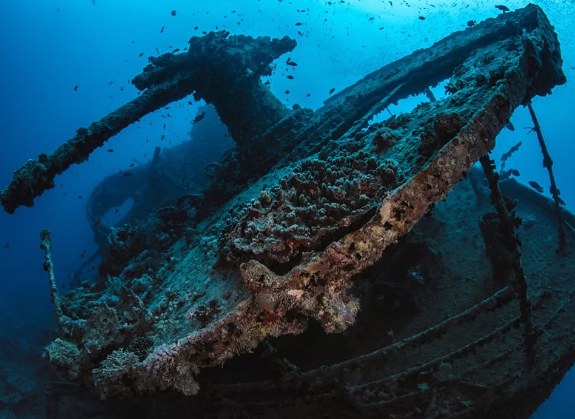
- Built
- Sunderland (United Kingdom), 1940
- Length
- 126.5 m
- Beam
- 17.7 m
- Tonnage
- 4,898 gross tons
- Sunk
- 6 October 1941
- Depth
- Down to about 30 m
- Location
- Strait of Gubal, near Ras Mohammed
Its last mission
The Thistlegorm left Glasgow on 2 June 1941 loaded with supplies for the British troops fighting in North Africa. As the Mediterranean was too dangerous, it had to sail all the way around Africa, stopping in Cape Town, and then up the Red Sea to the Suez Canal.
When it arrived, a collision between ships had blocked the canal. The Thistlegorm had to wait at anchor in the Strait of Gubal, in an area called “Safe Anchorage F”, alongside other Allied ships.
Why was it bombed?
In the early hours of 6 October 1941, around 1:30 am, two German Heinkel He 111 bombers that had taken off from Crete were flying over the area looking for a troop ship. They didn’t find it, but they saw the ships at anchor and attacked the Thistlegorm.
The bombs hit hold number 4, near the stern, where part of the ammunition was stored. The explosion split the ship, which sank in a few minutes. Nine men died, four sailors and five gunners, and the rest of the crew was rescued. Two days later, another cargo ship anchored nearby, the Rosalie Moller, suffered the same fate.
From oblivion to legend
In the early 1950s, Jacques-Yves Cousteau located the wreck thanks to local fishermen and brought up a motorbike, the captain’s safe and the ship’s bell. It was then forgotten for almost forty years, until a dive boat found it again in the early 1990s. Since then it has been one of the great icons of world diving.
What you see inside
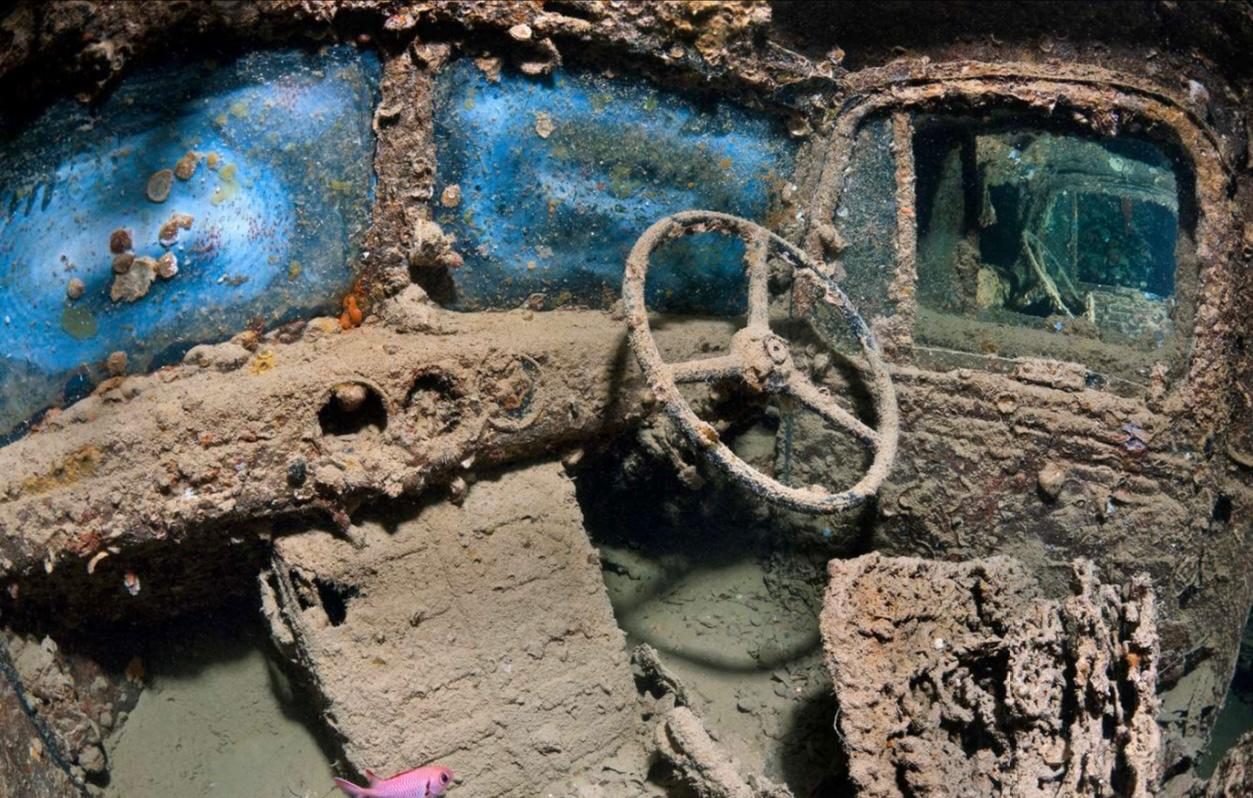
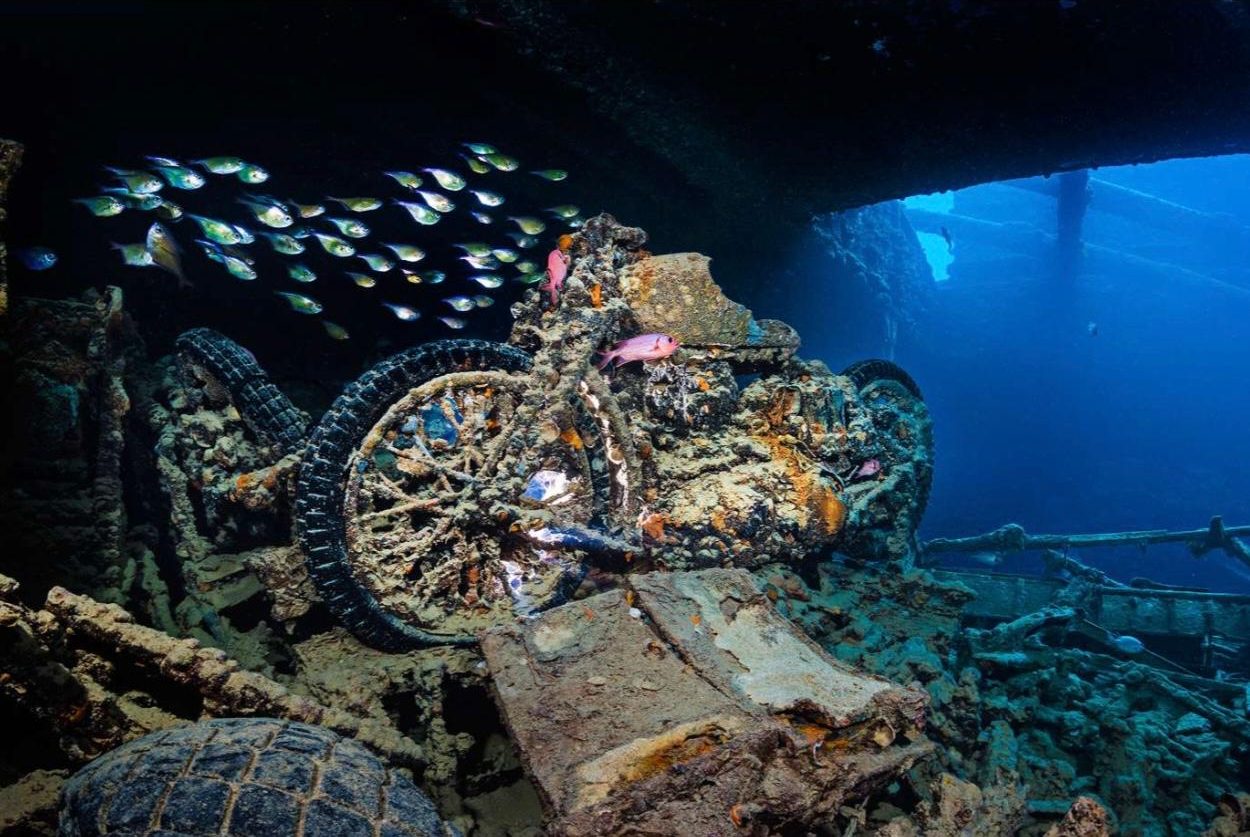
The Thistlegorm is a true Second World War museum:
- The holds: Bedford trucks, Norton and BSA motorbikes in rows, armoured vehicles, rifles, ammunition boxes, rubber boots and aircraft parts.
- The locomotives: they were carried on deck and were thrown off by the explosion. Today they rest on the seabed, one on each side of the hull.
- The explosion area: the middle of the ship was destroyed and its cargo scattered across the seabed, so you can see the force of the impact up close.
- Marine life: schools of fish around the structure, turtles, crocodilefish on the sand and corals covering every corner.
How many dives do you need?
At 126 metres long, a single dive is not enough. Ideally you need at least two or three:
- First dive, outside: from bow to stern, the locomotives and the explosion area, to understand the ship.
- Second dive, inside: the holds with the trucks and motorbikes.
- Night dive, if the sea allows: the wreck changes completely with its night life.
On our North & Brothers, North & Wrecks and Famous 5 routes we dedicate several dives to the Thistlegorm.
What certification do I need?
The wreck reaches about 30 metres and there is usually current, so we recommend the Advanced Open Water to enjoy it fully. With Open Water you can dive the shallower parts, always within your limits. To go inside the holds you need good buoyancy, and the wreck specialty is a big plus. If you don’t have your Advanced yet, you can get it on board that same week.
Dive with respect
The Thistlegorm is also a war grave and is deteriorating over time. Don’t touch or take anything, control your buoyancy inside the holds and always follow the guide’s instructions. That way it can keep amazing divers for many years to come.