Photography · 6 min read
Film your dives with your phone: how Divevolk housings work
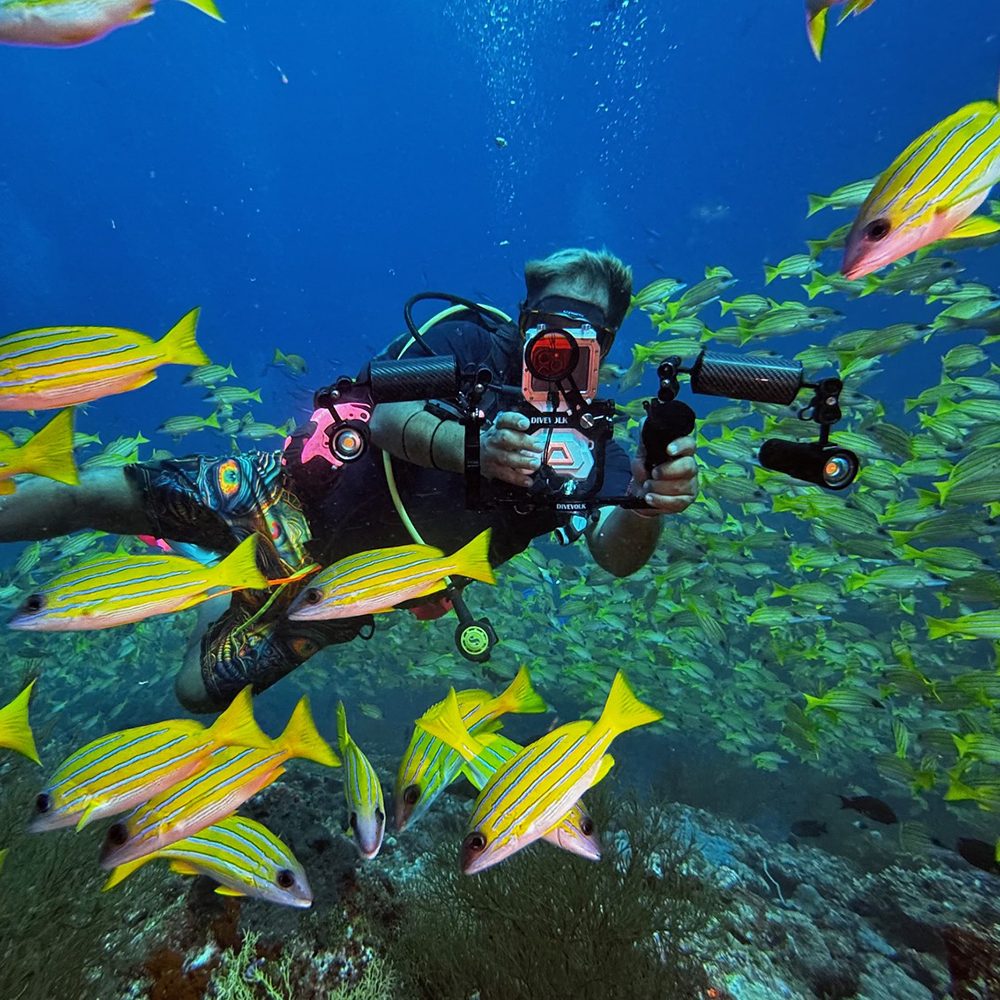
All the photos and videos you see on our website and on our Instagram are filmed with a phone inside a Divevolk housing. Here is how it works and which accessories we use to get the most out of it.
Your phone, turned into an underwater camera
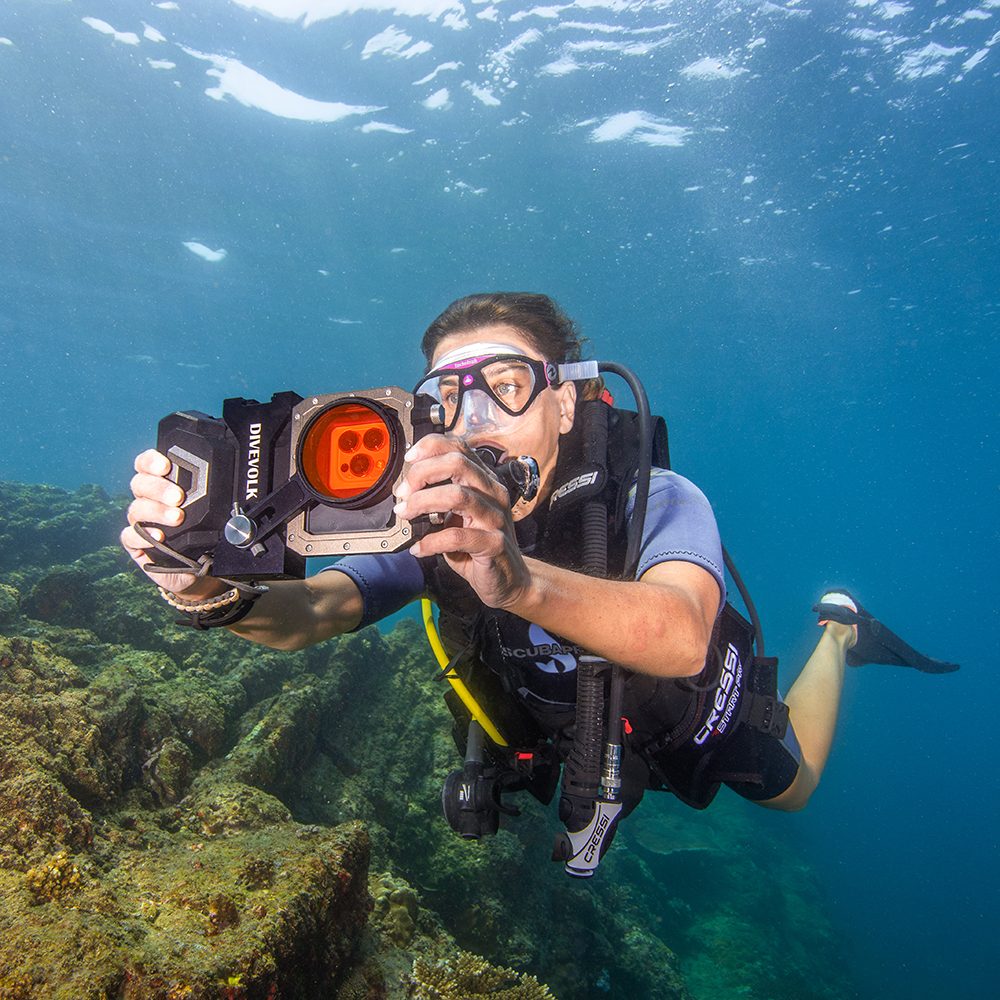
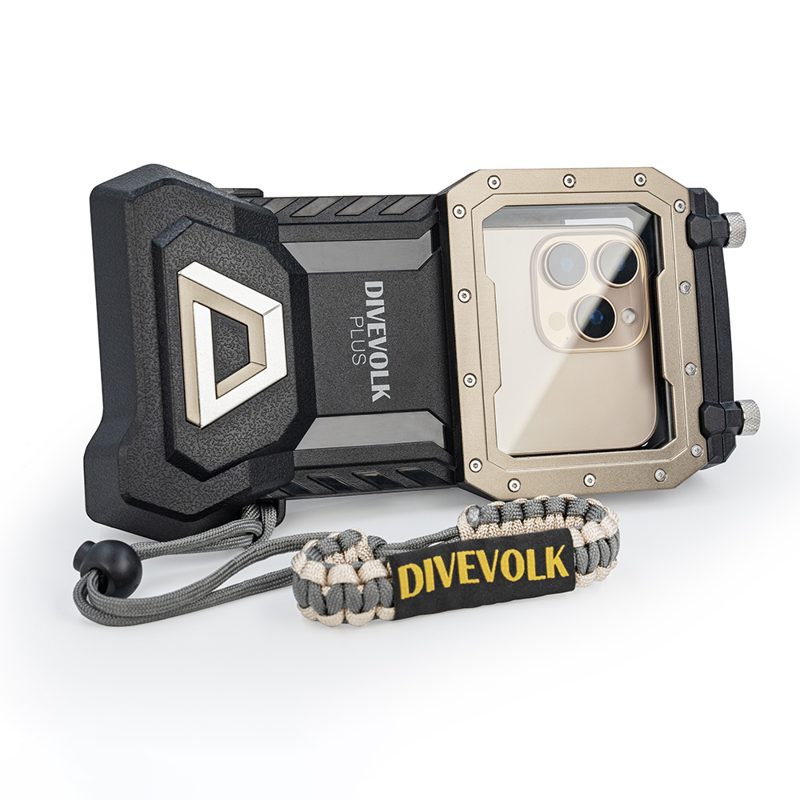
Divevolk makes waterproof housings where you put your own phone to take it underwater. The big difference compared with other housings is its touchscreen: the back has a transparent gel-filled membrane that transmits the pressure of your finger to the screen. So you can use your phone’s camera just like on land: switch from photo to video, zoom, choose slow motion or review what you have filmed.
Down to 60 metres
The most popular model, the SeaTouch 4 Max Plus, is made of polycarbonate and aluminium and is waterproof down to 60 metres, far more than you need on any recreational dive. It fits iPhones and most Android phones: the phone sits on an inner tray, and there are custom adapters for some models. For those who want something more advanced there is also the SeaTouch 4 Max Platinum.
How to use it
- Before the dive: put the phone on its tray, check that the seal is clean and close the lid properly.
- Underwater: the screen responds, but you need to press a little more firmly than on land. It doesn’t work with thick gloves; for that Divevolk has a touch finger cover.
- Afterwards: rinse it with fresh water and let it dry before opening it.
The accessories that make the difference
The housing alone already gives very good results, but accessories change everything:
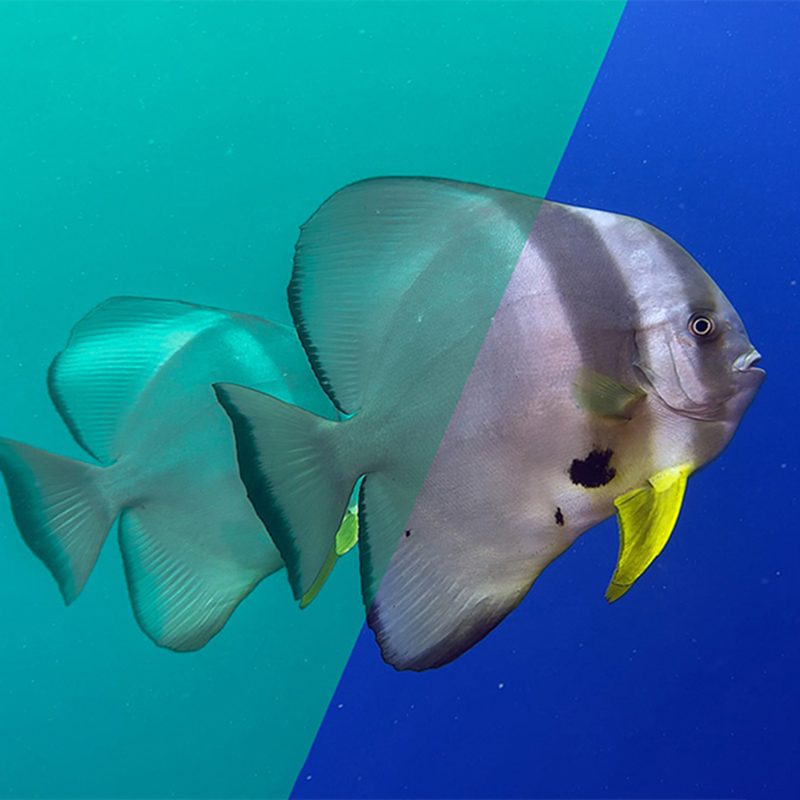
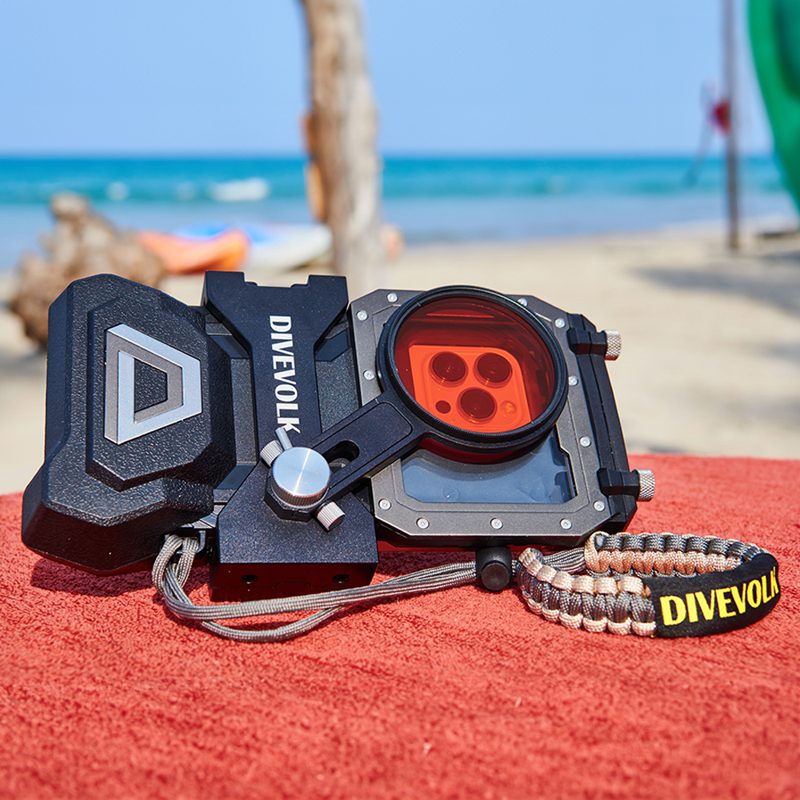
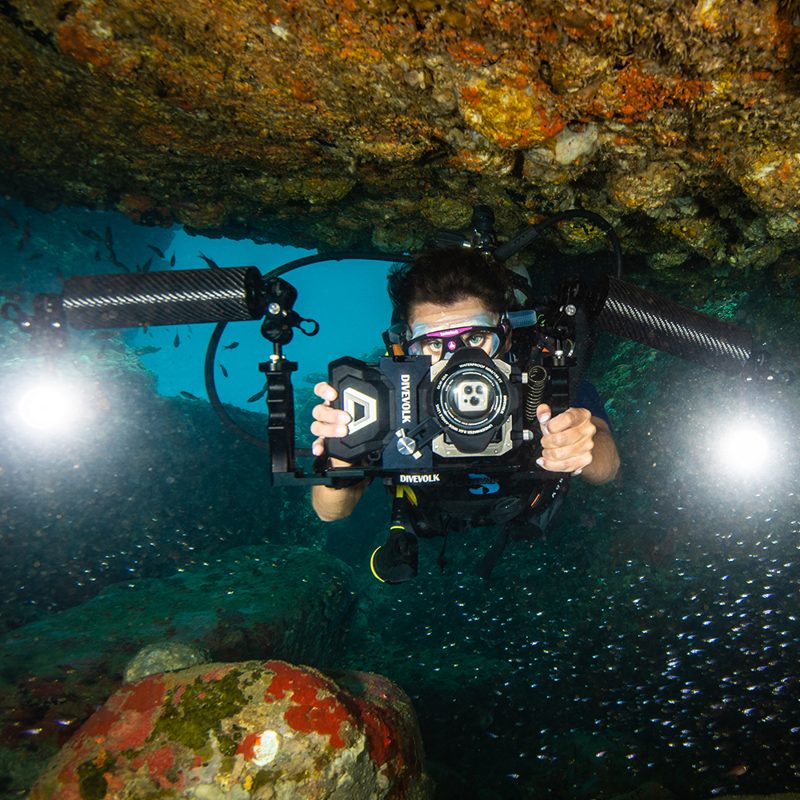
- Red and magenta filter (67 mm thread): underwater red disappears and everything looks blue. The red filter brings colours back in blue water, between 5 and 25 metres, which is exactly the Red Sea.
- 0.6x wide-angle lens: to fit the whole wreck, a coral wall or a school of fish.
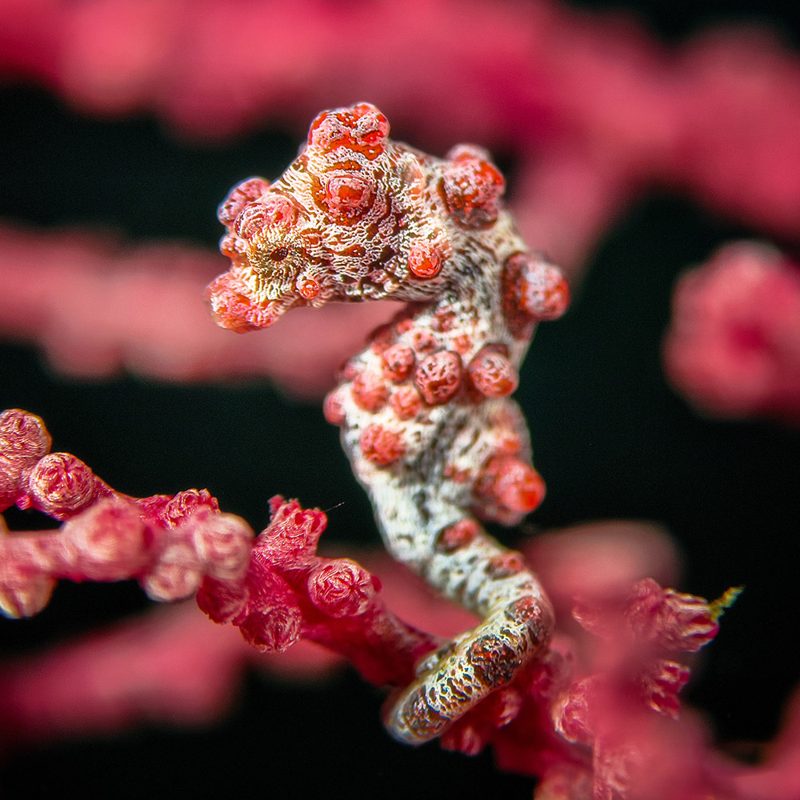
- +8 close-up lens: for macro, such as nudibranchs, small fish or coral details.
- SL20 video light (2,000 lumens): essential on wrecks like the Thistlegorm, on night dives and to bring back colour at depth.
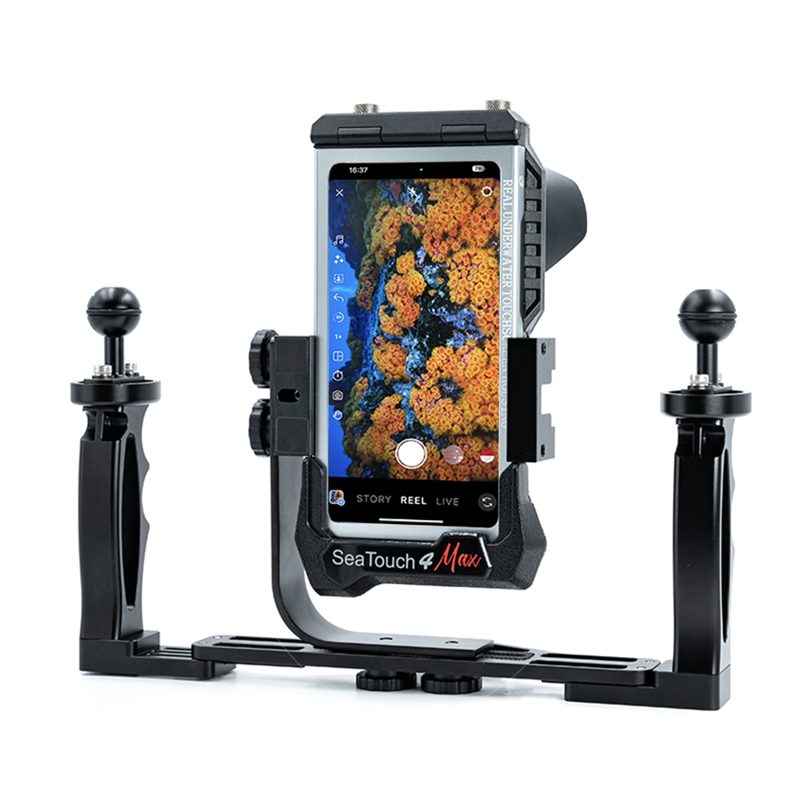
- Single or double-handle tray: stabilises your video and lets you mount lights and lenses.
- Float arms: offset the weight so the rig is neutrally buoyant and your wrist doesn’t get tired.
- Action camera adapter: mount your GoPro, DJI or Insta360 on top of the phone housing.
- Coil lanyard: clip the housing to your BCD so you never lose it.
- Cover and protective film for the membrane and the glass, and a travel case to carry everything safely.
Starter kits
If you don’t want to buy item by item, Divevolk bundles the housing with its accessories in kits: with filters, video kits with a wide-angle lens and double-handle tray, or macro kits with lens, light and arms.
Our advice
For the Red Sea, the combination that works best for us is the housing with the red filter for walls and reefs during the day, and a light for wrecks and night dives. With that you take home memories with the real colours of the reef.
See Divevolk housings · with a discountSee available departures